






 Home
Home


Search

Get Quote

Related Products
Product Description
Production process description:
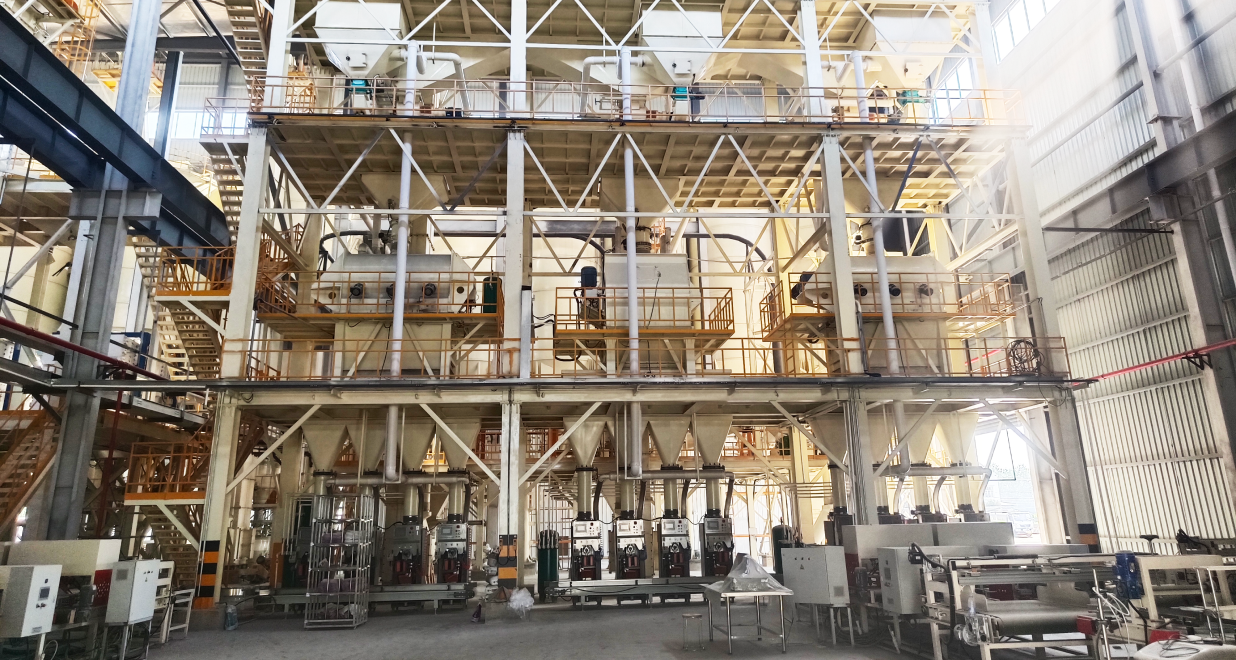
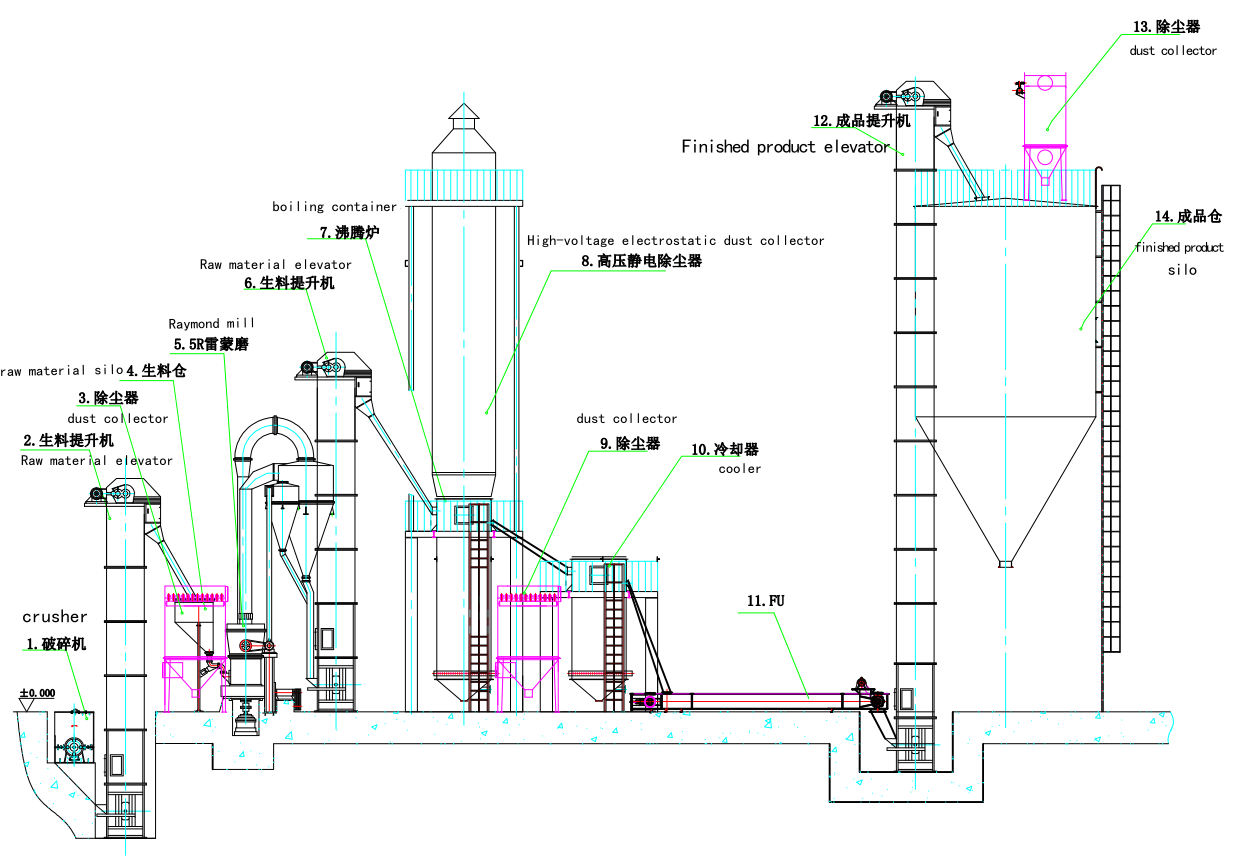
Both natural gypsum and chemical gypsum production lines involve multiple key links and equipment. Although their raw materials and some processes are different, the basic production processes have similarities.First, natural gypsum ore will be processed through a crushing system to crush large pieces of ore into small particles, preparing for subsequent treatment.The crushed gypsum particles are sent to the mill through the conveying system for grinding to achieve the desired fineness.Next, the ground gypsum will enter the calcining equipment, such as a boiling container, a rotary kiln, and a wok, and is calcined at high temperature, evaporating free water and part of the crystallized water to form hemihydrate gypsum.In addition, the cooling system is to ensure the storage stability of gypsum powder after calcination, the finished homogenization system is to ensure the consistency of gypsum powder index in each storage silo, and the electronic control system is responsible for the power supply and process control of the entire production line, ensuring the stable operation of the equipment in accordance with the predetermined procedures.Finally, the gypsum will be transported to the storage bin through the conveying system for subsequent use or storage.
For chemical gypsum, it is determined that it will contain a certain amount of free water (10%-20%) during the production process, so the first step of chemical gypsum is the drying process. Its function is to remove all free water so that the moisture content of chemical gypsum is consistent before calcination, so as to facilitate the stability of calcination quality.Because the particle size of chemical gypsum is very small, it does not need to be ground before calcination. Instead, it needs to be modified after calcination. This stage of equipment mostly uses ball mills and other types of impact mills. As for calcining equipment, the aging and homogenization of cooling equipment are the same as natural gypsum.
In terms of thermal energy: Our company has conducted in-depth research on the current different energy and equipment.
Fuels: coal, biomass fuel, natural gas, light diesel, heavy oil, etc.
Equipment: boiling container, chain discharge furnace, natural gas burner, diesel burner, heavy oil burner, etc.
Heating medium: air, saturated water vapor, thermally conductive oil, etc.
Get Quote
Related Products
Product Features
Our company has a deep research on production processes, especially in the selection of production processes and equipment for building gypsum of different uses.
Natural gypsum production line
The natural gypsum production line is usually divided into the following 8 parts:
1.Crushing system: Large-sized gypsum ore is crushed into small particles less than 30mm by crusher for subsequent processing. Due to the different particle sizes of the ore, you can choose jaw break, counterattack break, hammer break, etc.
2.Material storage conveying and metering system: The material storage and conveying system is responsible for transporting the crushed gypsum particles to a designated location for use in subsequent processes. Most of its equipment are storage tanks, belt machines, bucket lifters, material level meters, etc. The metering devices are mostly metering belt machines, electromagnetic dischargers, and volumetric metering devices. They are used for quantitative transportation of raw materials for mills and calcining.
3. Grinding system: Feed the gypsum particles into the mill for grinding to achieve the fineness required by the product. Most of the equipment used are Raymond mills, European vertical mills, hammer mills, roller mills, Pitt mills, etc.
4. Calcination system: The grinded gypsum raw powder is sent to the calcination equipment for calcination to evaporate free water and part of the crystallized water to obtain hemihydrate gypsum that meets the requirements. The calcination process can be divided into two types: slow calcination and flash calcination processes. The equipment that realizes the slow calcination process is rotary kiln, boiling container, frying pan, etc. The equipment that realizes the flash calcination process is airflow calcination, Pitt mill, hammer mill, Vican., etc.
5. Cooling system: The cooling system is to ensure the storage stability of gypsum powder after calcination, so as to avoid secondary calcination.
6. Finished product homogenization system: The finished product homogenization system is to ensure the constant gypsum powder index in each storage silo. Most of the circulation systems are FU, bucket lifting machine, grid divider, etc.
7. Heating system: It is to provide the thermal energy required for the calcining system. Most of the equipment is boilers, burners, etc. and stable fuel supply systems.
8. Automation system: Responsible for the power supply and process control of the entire production line, ensuring that the chui equipment operates stably according to the predetermined procedures. It consists of a PLC system and a power supply and control system.
Chemical gypsum production line
The chemical gypsum production line is mainly used for industrial by-product gypsum. Its production line is slightly different from the natural gypsum production line, usually including the following parts:
1. Raw material pretreatment system: perform preliminary treatment of chemical gypsum, such as breaking, cleaning, etc.
2. Pre-drying system: Drying chemical gypsum to evaporate the surface moisture to facilitate subsequent calcination. Most of the equipment is tube bundle machines, airflow dryers, paddle machines, etc.
3. Calcination system: Similar to the building gypsum production line, chemical gypsum also needs to be calcined at high temperature in the calcination equipment to obtain qualified hemihydrate gypsum. The equipment is consistent with natural gypsum calcining equipment.
4. Cooling system: The cooling system is to ensure the storage stability of gypsum powder after calcination. It mostly uses gas cooling methods. The equipment is the same as natural gypsum cooling.
5. Finished product homogenization system: The finished product homogenization system is to ensure the consistency of the gypsum powder index in each storage silo. The equipment is the same as natural gypsum cooling.
6. Heating system: It is to provide the thermal energy required for the calcining system. Most of the equipment is boilers, burners, etc. and stable fuel supply systems.
7. Gypsum modification system: It is a grading that changes the gypsum lattice and changes the gypsum grain size. It is mostly completed by hammer mills, ball mills and other impact grinders.
8. Material storage conveying system: Responsible for transporting the calcined and cooled gypsum into the storage silo for subsequent use or storage. Most of the equipment is FU, bucket lifting machine, feeding valve, pneumatic valve, dust collector, etc.
9. Electrical control system: Responsible for the power supply and process control of the entire production line, ensuring that each equipment operates stably according to the predetermined procedures. It consists of a PLC system and a power supply and control system.
Show All


Project Cases